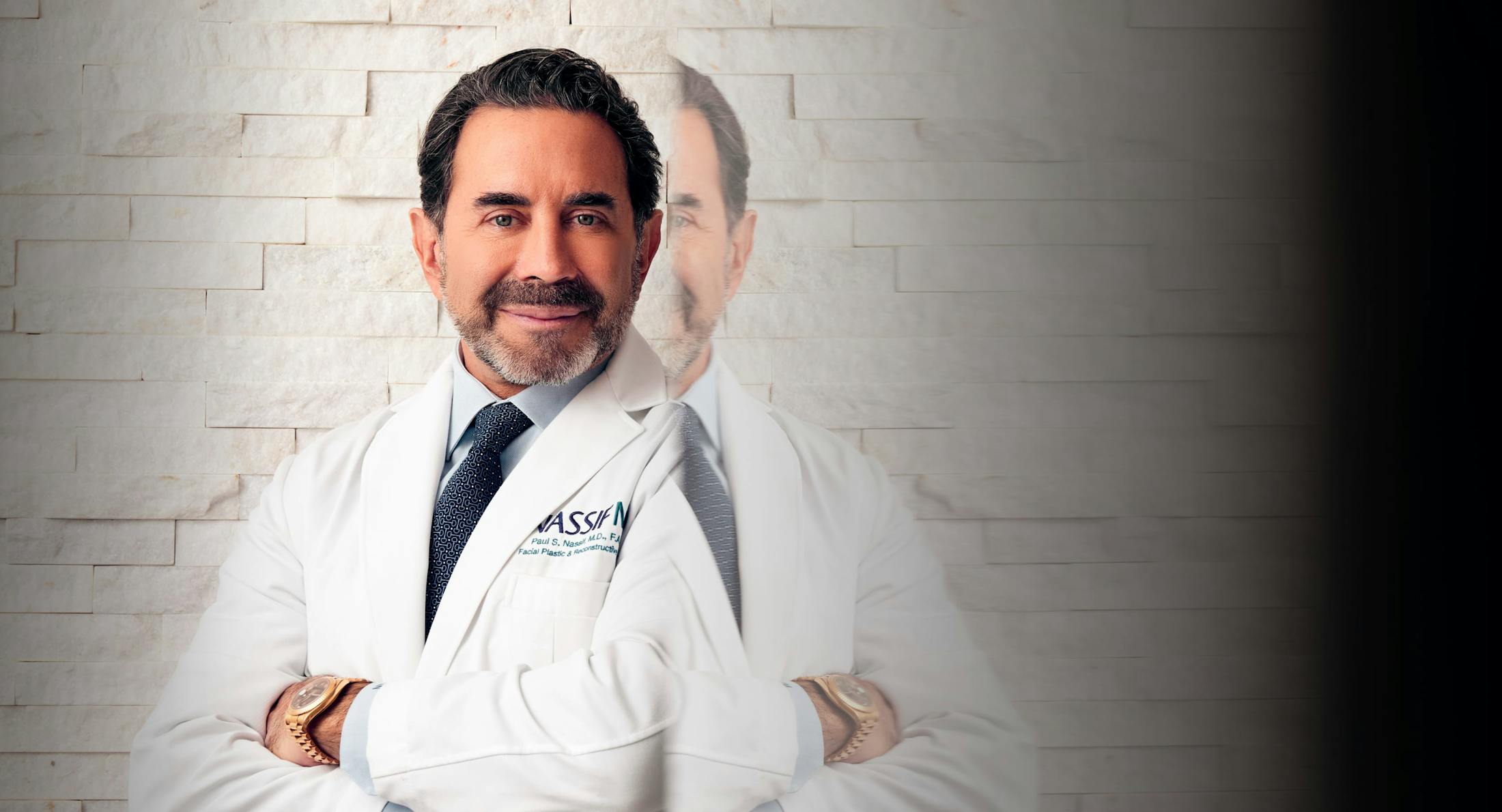
Neck lift surgery has traditionally been associated with patients in their fifties and sixties addressing significant aging in the lower face and neck. That demographic is changing. At NassifMD Plastic Surgery in Beverly Hills and Newport Beach, Dr. Paul Nassif is seeing a growing number of patients in their thirties and forties seeking neck evaluation and, in some cases, surgical intervention earlier than previous generations would have considered.
The term "tech neck" has entered the cultural conversation as shorthand for a cluster of changes that appear to be accelerating in younger patients, and it is worth examining honestly what the phenomenon actually involves, what it does to the neck over time, and what surgery can and cannot address.
What "Tech Neck" Actually Is
The Posture Problem
Tech neck refers to the postural habit of holding the head forward and downward for extended periods, most commonly while looking at a phone, tablet, or laptop screen. The average adult head weighs approximately ten to twelve pounds in a neutral position. As the head tilts forward, the effective gravitational load on the cervical spine increases dramatically, placing significant stress on the neck muscles and the skin overlying them.
This is not a new phenomenon in human biology. Sustained forward head posture has been documented for decades. What has changed is the duration and frequency of the behavior. Many people now spend six, eight, or more hours per day in postures that involve sustained downward head flexion, beginning in adolescence and continuing throughout their working lives.
What It Does to the Neck Over Time
The mechanical effects of sustained tech neck posture on the neck's appearance are several:
- Repeated folding of the neck skin accelerates the formation of horizontal neck lines and creases, which deepen over time and become progressively more difficult to reverse
- The platysma muscle, which runs vertically from the lower face to the chest, is subjected to repeated stress that may accelerate its laxity and banding
- The skin of the neck, which is thinner and more delicate than facial skin, loses elasticity faster when subjected to chronic mechanical stress
- Younger patients are developing a degree of neck skin laxity and horizontal creasing that their parents' generation did not experience at the same age
What Is Bringing Younger Patients to NassifMD
Awareness Has Increased
Patients in their thirties and forties are more aware of their appearance than previous generations at the same age, partly because of the ubiquity of front-facing cameras and video calls. The neck is clearly visible in most self-facing camera views, and patients are noticing changes earlier than they would have before the smartphone era.
Prevention Is a Growing Motivation
Many younger patients who consult with Dr. Nassif are not yet candidates for surgical intervention. They are aware that changes are beginning to appear and want to understand their options, including non-surgical ones, before the changes become more significant. This preventive mindset is a shift from the traditional approach of waiting until aging is advanced before seeking treatment.
Some Patients Are Surgical Candidates Earlier Than Expected
A subset of younger patients presents with enough skin laxity, platysmal banding, or submental fullness to warrant a genuine surgical conversation. Genetics plays a significant role in how and when the neck ages. A 35-year-old with a family history of early neck laxity and the compounding effect of years of sustained tech neck posture may have a neck that benefits from surgical intervention significantly earlier than average.
What a Neck Lift Can and Cannot Address
What Surgery Addresses
A neck lift at NassifMD can address:
- Platysmal banding, the vertical cord-like bands that appear in the neck as the muscle edges separate and become visible
- Submental fat, either through direct excision or liposuction
- Skin laxity that has progressed beyond what non-surgical treatments can meaningfully improve
- The overall contour of the neck and jawline, restoring the clean, defined angle between the chin and neck that is associated with a youthful appearance
What Surgery Cannot Address
Tech neck posture and horizontal neck lines present a more nuanced picture. Horizontal creases that have developed from years of repeated downward flexion of the neck are not simply removed by a neck lift. These lines are etched into the skin through a combination of skin thinning, collagen loss, and repeated mechanical folding. A neck lift addresses laxity and platysmal issues but does not fully erase deep horizontal creases.
Managing expectations around this is important. Dr. Nassif is direct with younger patients about what a neck lift will and will not improve, and about whether the timing of surgery is appropriate or whether non-surgical management is a better starting point.
Non-Surgical Options for Younger Neck Patients
For patients who are not yet candidates for surgery, or who prefer to delay surgical intervention, several non-surgical approaches are available at NassifMD that can slow the progression of tech neck changes:
- Neurotoxin injections into the platysma can soften the appearance of platysmal banding and address early neck laxity
- Skin-tightening treatments can improve the quality and firmness of neck skin when laxity is mild
- Skincare regimens that support collagen production and skin elasticity help slow the surface changes associated with chronic neck flexion
- Postural modification and ergonomic adjustments can meaningfully reduce the ongoing mechanical stress that drives tech neck changes
What to Expect From Neck Lift Surgery at NassifMD
For patients who are candidates for surgical intervention, understanding what the experience involves from consultation through recovery helps set realistic expectations.
The Surgery
The procedure itself is performed under general anesthesia and typically takes two to three hours depending on the extent of correction needed. Incisions are placed beneath the chin and within the natural creases around the ears, keeping them discreet and well concealed once healed.
Post Op Week One
In the first week, patients can expect swelling, bruising, and a feeling of tightness in the neck that gradually resolves. A compression garment is worn during this period to support the healing tissue and minimize swelling. Most patients remain at home during the first seven to ten days.
Post Op Weeks Two and Three
By weeks two and three, bruising fades significantly and most patients feel comfortable resuming light activity and non-physical work. The neck begins to look noticeably improved during this window, though residual swelling continues to resolve.
Post Op Three to Six Months
Final results are typically visible at the three to six month mark, when the tissue has fully settled and the skin has conformed to its new contour. For younger patients whose skin retains good elasticity, the result tends to settle quickly and last well into the following decade.
When Neck Lift Surgery Is the Right Answer
For patients at NassifMD who have progressed beyond what non-surgical options can meaningfully improve, Dr. Nassif's neck lift technique addresses the platysmal anatomy directly, tightening the muscle and removing or repositioning the submental fat before addressing the overlying skin. This layered approach produces a cleaner, more lasting result than procedures that address only the surface.
Dr. Paul Nassif is a double board-certified facial plastic and reconstructive surgeon with decades of experience in complex facial rejuvenation. His recognition as a Castle Connolly Top Doctor and his global reputation for natural, undetectable results make NassifMD one of the leading destinations for patients considering neck lift surgery in Beverly Hills and Newport Beach.
If you are noticing early changes in your neck and want an honest evaluation of your options, contact NassifMD to schedule your consultation today.