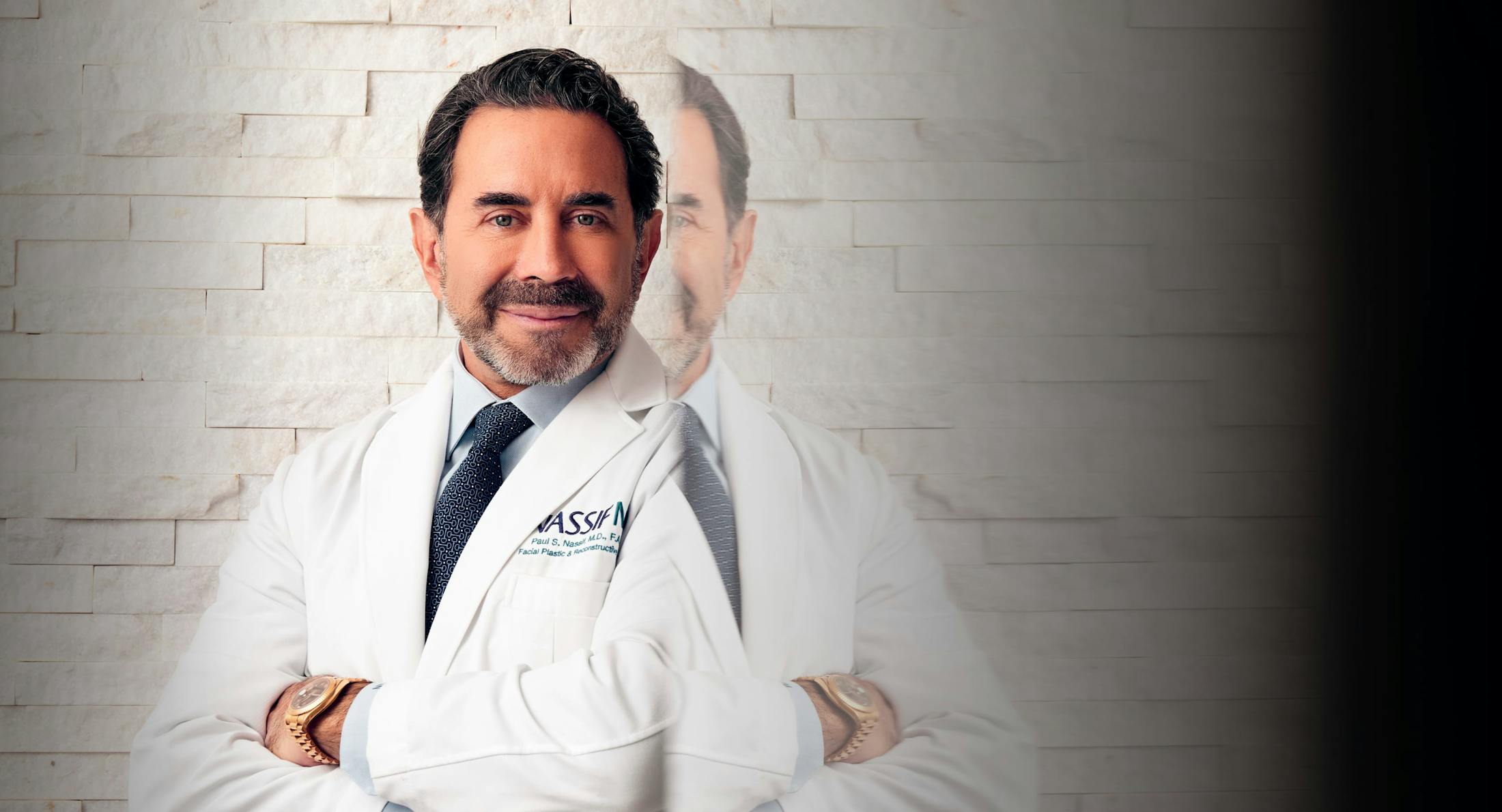
Men now represent one of the fastest-growing segments of plastic surgery patients in the United States, and facelift surgery is no exception. But a men's facelift is not simply a facelift performed on a man. It requires a different approach to anatomy, incision placement, tissue handling, and aesthetic goals, and getting those differences right is what separates a natural, masculine result from one that looks operated upon or, worse, feminized.
Why Men's Facelift Surgery Is Technically Different
Anatomy and Skin Thickness
Men's facial skin is generally thicker and more sebaceous than women's, with a denser dermal layer and more robust subcutaneous tissue. This affects how the skin responds to elevation, how it redrapes after the deeper layers are repositioned, and how the healing process unfolds. Thicker skin can be more forgiving in terms of incision closure but requires different tension management during redraping.
Men also typically have less subcutaneous fat in the midface than women, and their facial fat compartments are distributed differently. This changes how volume loss presents with age and how aggressively the deeper layers need to be addressed to produce visible improvement.
Blood Supply Considerations
Men's faces have a significantly richer blood supply than women's, largely due to the vascular network that supports beard hair follicles. This increased vascularity means more bleeding during surgery and greater importance placed on meticulous hemostasis throughout the procedure. At NassifMD, Dr. Paul Nassif's extensive surgical experience with men's facelift procedures accounts for this from the outset of operative planning.
Incision Placement Is More Complex
This is where a great deal of the technical difference between male and female facelift surgery lies. In women, incisions can be placed along the hairline and within the natural skin folds around the ear with significant flexibility, as hair can conceal a wide range of incision locations and the tragus provides predictable landmarks.
Complications: The Beard
In men, the beard complicates everything. The standard facelift incision runs in front of the ear along the tragus. In male patients, this presents a specific problem: if the incision is placed incorrectly, the beard skin from the cheek is pulled toward the ear and onto the tragus, resulting in hair-bearing skin in a location where hair should not grow. This is both aesthetically problematic and practically difficult for the patient to manage when shaving.
Dr. Nassif places incisions in male patients with deliberate attention to the hairline of the beard, the position of the sideburn, and the tragal anatomy, routing the incision in a way that keeps the beard in its natural distribution while still allowing adequate tissue repositioning.
What Men Want From a Facelift and Why It Differs From Women's Goals
Restoring Definition Without Softening
Most male facelift patients at NassifMD are not seeking dramatic change. They want a jawline that looks defined rather than jowled, a neck that is clean and angular rather than soft and loose, and an overall appearance that reads as rested, healthy, and strong rather than aged or tired.
The aesthetic target for a man is fundamentally different from that of a woman. Features that read as youthful and attractive in women, elevated cheeks, a softened jawline, fuller lips, are not the features a man wants enhanced. A successful men's facelift maintains and restores the angular, structured quality of a masculine face rather than importing feminine softness into the result.
The "No One Should Know" Standard
Male patients have historically been less open about cosmetic surgery than female patients, and many specifically request that their result be indistinguishable from natural aging in reverse. They want to look like they have been taking better care of themselves, sleeping better, or lost some weight. They do not want to look like they had a facelift.
This places a premium on techniques that avoid the pulled, windswept, or overly tight look. At NassifMD, Dr. Nassif's deep plane facelift approach, which repositions the deeper structural layers rather than relying on skin tension, is particularly well suited to male patients because results settle more naturally and avoid the surface tension that signals surgery.
The Deep Plane Approach for Men
The deep plane facelift releases the facial retaining ligaments and repositions the SMAS layer and overlying tissue as a unified composite unit. Because the lift comes from deeper structural repositioning rather than skin tension, the skin redrapes without artificial tightness and the result looks natural in motion as well as at rest.
For male patients, this technique is especially appropriate because:
- The result does not create a lateral pull that feminizes the face
- The jawline improvement is clean and angular rather than soft
- The neck correction restores the straight, defined platysmal profile that characterizes masculine anatomy
- The absence of surface tension means the result does not look surgical
Dr. Nassif's approach to the deep plane in male patients also accounts for the thicker skin and richer blood supply, adjusting the dissection plane and tissue handling accordingly.
Long-Lasting Results
The deep plane is also particularly well suited to male patients because the results tend to last longer than those from more superficial techniques. Because the lift is anchored at the level of the retaining ligaments rather than held in place by skin tension alone, the correction is more durable over time. For male patients who want a result that looks natural for years rather than one that requires early revision or repeat surgery, the deep plane approach represents the most complete and lasting solution available at NassifMD.
Recovery After a Men's Facelift at NassifMD
Recovery from a men's facelift follows the same general timeline as female facelift surgery, with a few notable practical differences.
Men who wear beards often have questions about when they can shave and when the beard will grow back normally in areas near the incisions. Dr. Nassif addresses this during the pre-operative consultation and provides specific guidance based on each patient's beard distribution and incision plan.
Most male facelift patients at NassifMD can expect:
- One to two weeks before returning to non-physical work
- Three to four weeks before resuming exercise and physical activity
- Three to six months before the final settled result is fully visible
The healing beard growth around incision sites can actually be an advantage, providing natural concealment as scars mature.
Swelling: What to Expect
Swelling in male patients can sometimes be more pronounced in the early weeks than in female patients, again related to the denser tissue and richer vascularity of male facial skin. This does not indicate a complication. It is a normal part of the healing process that resolves as the tissue settles. Most male patients find that by the end of the second week they are comfortable being seen in public, and by the end of the first month the improvement is clearly visible even if final results are still developing.
Scheduling a Men's Facelift Consultation at NassifMD
Dr. Paul Nassif is a double board-certified facial plastic and reconstructive surgeon recognized globally for producing natural, undetectable results. His experience with male patients spans decades, and his understanding of masculine facial anatomy and aesthetic goals makes NassifMD one of the leading destinations for men's facelift surgery in Beverly Hills and Newport Beach.
If you are considering a facelift and want to understand what the right approach for your anatomy looks like, contact NassifMD to schedule your consultation today.