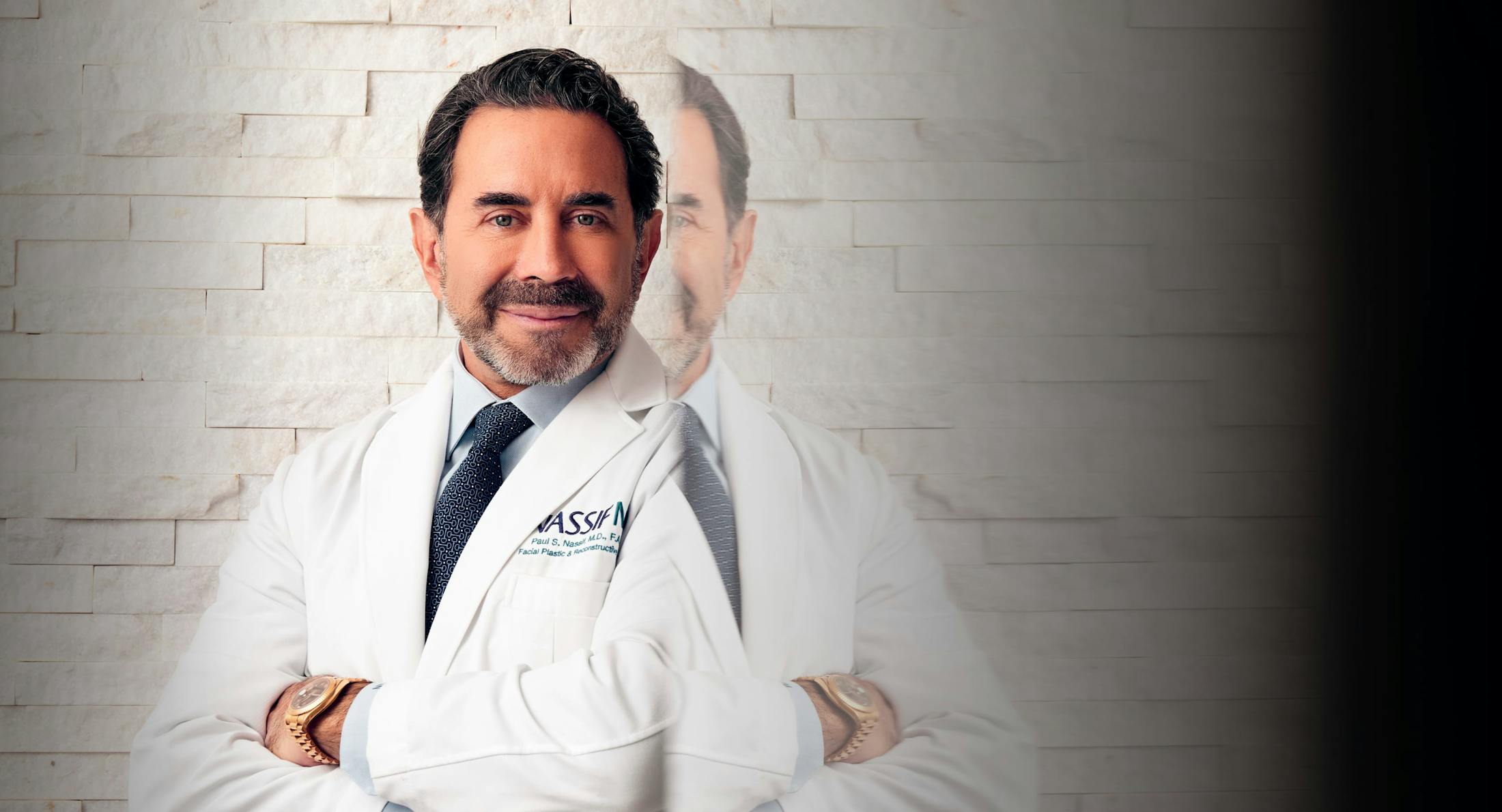
One of the most common complaints patients bring to NassifMD Plastic Surgery is something that sounds almost paradoxical: they are told they look angry, tired, or unapproachable when they feel none of those things. They have tried Botox. It helped for a while, or partially, but the underlying quality of their expression never fully changed.
The reason is usually structural and the solution is often a brow lift.
Why Expression Does Not Always Reflect How You Feel
The face communicates emotion through a combination of muscle movement and structural position. When you are genuinely resting and relaxed, the muscles of the face are relatively inactive, and the expression you project is determined largely by the resting position of the brow, the upper eyelids, and the midface.
When the brow has descended below its anatomically youthful position, the resting expression it creates is one of heaviness, sternness, or fatigue. This is not a matter of muscle activity. It is a matter of where the brow sits. No amount of Botox or emotional expression can override the structural position of a descended brow.
Why It Matters
This distinction matters clinically because it determines the right treatment. Botox works by relaxing specific muscles. When the problem is muscle overactivity creating a scowl, Botox directed at the corrugator and procerus muscles can meaningfully improve the resting expression. But when the problem is brow position rather than muscle tone, Botox has a ceiling. It can relax the muscles pulling the brow down but cannot lift a brow that has anatomically descended beyond where relaxation alone can restore it.
What Brow Descent Actually Looks Like
The Medial Brow and the "Angry" Look
The medial, or inner, brow is the segment most directly associated with a stern or angry resting expression. When the medial brow descends, it draws the brow tissue downward and inward, creating a crowding of soft tissue between the brows that produces vertical frown lines. The expression this creates at rest is one of displeasure, concentration, or aggression.
Botox to the corrugators and procerus softens the lines themselves and reduces the pull of these muscles, which is why patients typically see improvement.
But in cases of true medial brow descent, the brow anatomy has dropped to a position where the residual heaviness and inward crowd of tissue persists even when the muscles are relaxed. Lifting the medial brow to its appropriate position corrects the structural source of the expression rather than managing the muscle activity that contributes to it.
The Lateral Brow and the "Tired" Look
The lateral, or outer, brow descends earlier and more dramatically than the medial brow in most patients. The outer segment of the brow has less muscular support than the inner and relies more heavily on the soft tissue and skin of the forehead to maintain its position. As this tissue loses elasticity over time, the lateral brow falls.
A descended lateral brow creates a different expression than medial descent. Rather than looking angry, patients with significant lateral brow descent look perpetually tired, heavy-lidded, or even sad. The outer corner of the eye appears dragged downward, and the upper eyelid space is narrowed by the overhanging brow tissue.
This is also the area that produces lateral upper eyelid hooding, the fullness at the outer corner of the eyelid that many patients attribute to excess eyelid skin. In some cases that is correct. In many cases, the hooding is partially or entirely driven by lateral brow descent pushing tissue into the eyelid space.
Why Botox Alone Is Not Enough in These Cases
Botox can be an excellent adjunct to brow position management, and for patients with mild descent or predominantly muscle-driven concerns, it may be sufficient on its own. But there are clear situations where it cannot provide the result the patient needs.
Botox relaxes the depressor muscles of the brow, which allows the frontalis to elevate the brow slightly as it becomes relatively unopposed. This is the mechanism behind the "Botox brow lift," a technique where neurotoxin is used to create a modest elevation of the brow. In the right patient with mild descent, this can produce a meaningful improvement.
The limitations appear when:
- The brow has descended to a position where muscle relaxation alone cannot restore it to an appropriate anatomical location
- The lateral brow hooding is significant enough that it requires surgical correction to meaningfully open the eyelid space
- The patient's frontalis muscle is already working at or near maximum capacity to compensate for the descent, and Botox to the depressors produces little additional elevation
- The patient has become dependent on high doses of Botox to maintain an acceptable brow position, with diminishing returns over time
In these situations, a brow lift addresses what Botox cannot.
What a Brow Lift at NassifMD Involves
Modern Technique vs. Outdated Results
The raised-eyebrow, perpetually surprised look that many patients associate with brow lift surgery reflects older, more aggressive techniques that overcorrected the brow position. Modern brow lift surgery at NassifMD is designed to restore natural, appropriate brow anatomy, not to create an artificial elevation.
Dr. Paul Nassif performs brow lifts using techniques calibrated to each patient's specific anatomy, degree of descent, and aesthetic goals. The goal is always a brow position that looks like it belongs to the patient's face, proportionate to the orbital rim and consistent with their natural brow architecture before descent.
Endoscopic vs. Open Techniques
For many patients, an endoscopic brow lift using small incisions within the hairline allows adequate access to release and reposition the brow with minimal visible scarring and a faster recovery than traditional open approaches. For patients with more significant descent, a hairline or coronal approach may provide more complete correction.
Dr. Nassif evaluates each patient's hairline position, degree of descent, forehead height, and skin quality before selecting the appropriate technique, ensuring that the surgical approach fits the specific needs of the patient rather than applying a one-size-fits-all method.
Combining a Brow Lift With Other Procedures
Many patients who benefit from a brow lift also have concurrent concerns with the upper eyelids, lower eyelids, or the midface. Combining a brow lift with eyelid surgery is one of the most common pairings at NassifMD, addressing both the structural position of the brow and the condition of the eyelid itself in a single operative session.
For patients undergoing a comprehensive facial rejuvenation, a brow lift integrates naturally with a facelift to address the upper face simultaneously with the lower face and neck. Dr. Nassif plans combined procedures with careful attention to how each element interacts with the others, ensuring that the proportions of the face remain balanced throughout.
Scheduling a Brow Lift Consultation at NassifMD
If you are consistently told that you look tired, angry, or unapproachable when you feel none of those things, the structural position of your brow deserves an honest evaluation. Dr. Paul Nassif is a double board-certified facial plastic and reconstructive surgeon, a Castle Connolly Top Doctor, and one of the world's most recognized authorities on facial rejuvenation.
At NassifMD Plastic Surgery in Beverly Hills and Newport Beach, every consultation begins with a thorough evaluation of facial anatomy and an honest conversation about what will and will not make a meaningful difference. Contact NassifMD to schedule your brow lift consultation today.